



A cyber incident is no longer just an IT problem. For businesses, it can affect operations, finances, customers, employees, and brand reputation.
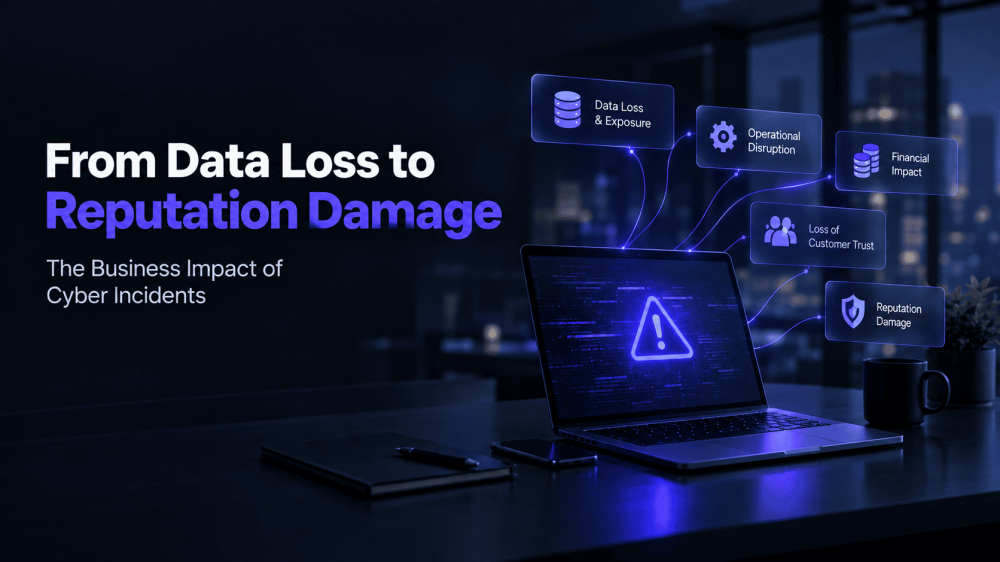
1. Data Loss and Exposure
Business data is one of an organization’s most valuable assets. Customer information, employee records, financial documents, intellectual property, and business credentials can all become targets.
When data is lost, stolen, or exposed, businesses may face operational difficulties, privacy concerns, legal obligations, and loss of customer confidence.
2. Business Disruption
Cyber incidents can interrupt everyday operations. If critical systems or applications become unavailable, employees may be unable to work and customers may be unable to access services.
Even when systems are restored quickly, the disruption can result in lost productivity, delayed services, and financial losses.
3. Financial Impact
The cost of an incident extends beyond fixing the technical issue. Organizations may have to spend on investigation, recovery, security improvements, legal support, customer communication, and business interruption.
For smaller businesses, these unexpected costs can be particularly difficult to absorb.
4. Customer Trust
Customers trust businesses with their information. When that trust is affected by a cyber incident, rebuilding it can take considerably longer than fixing the technical problem.
A customer may ask:
“If they couldn’t protect our data, can we trust them with our business?”
This makes cybersecurity directly connected to customer retention and business relationships.
5. Reputation Damage
News of a significant cyber incident can spread quickly. A company may be perceived as unprepared or unreliable, even after the technical problem has been resolved.
For B2B companies, reputation matters not only with customers but also with partners, suppliers, investors, and potential clients.
6. Regulatory and Legal Consequences
Depending on the type of data involved and the applicable laws, organizations may have reporting, notification, contractual, or regulatory responsibilities following an incident.
This adds another layer of complexity and cost to the recovery process.
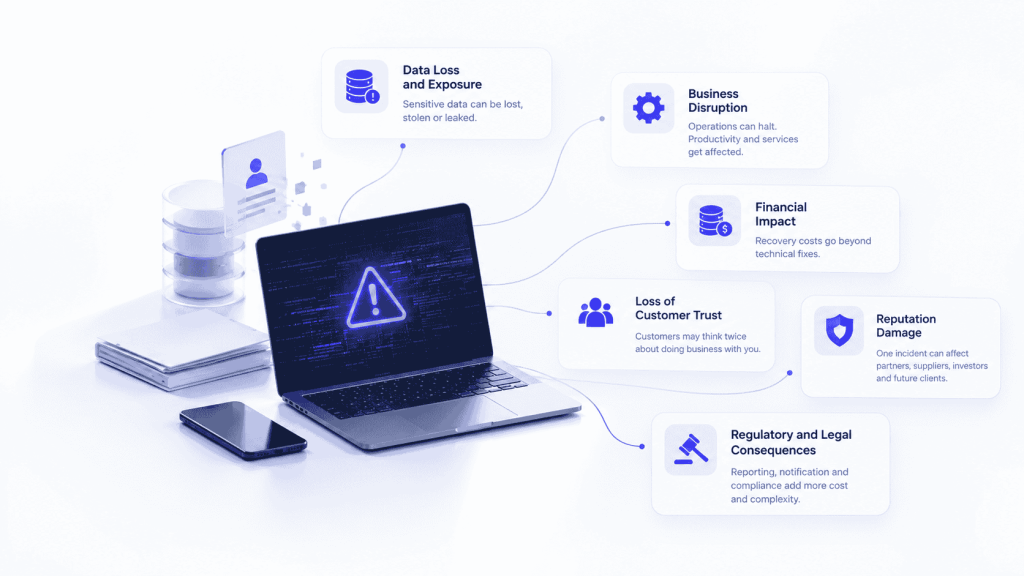
The Bigger Picture
The impact of a cyber incident can follow a chain:
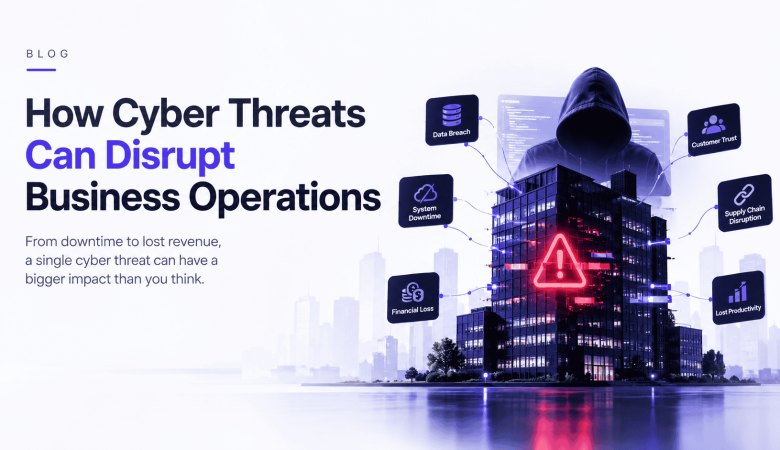
Cyber incident → Data exposure → Operational disruption → Financial loss → Loss of trust → Reputation damage
And the effects don’t necessarily end when the technical vulnerability is fixed.
The proactive approach
Businesses shouldn’t wait for a breach to discover what is exposed. Continuous security assessment, vulnerability management, threat intelligence, and monitoring of digital exposure can help organizations identify potential risks earlier and take action before they become larger business problems.
Where Bugv Comes In
This is where Bugv can play an important role. Bugv helps organizations take a proactive approach to security by connecting them with security researchers through bug bounty programs and crowdsourced vulnerability testing. Instead of relying only on periodic security checks, organizations can have ethical hackers identify vulnerabilities in their systems and report them so they can be addressed before they are exploited. By turning real-world security research into actionable vulnerability reports, Bugv helps businesses strengthen their security posture and reduce the risk of vulnerabilities becoming costly incidents.
Cybersecurity isn’t just about protecting data. It’s about protecting the trust, continuity, and reputation that a business has worked to build.