


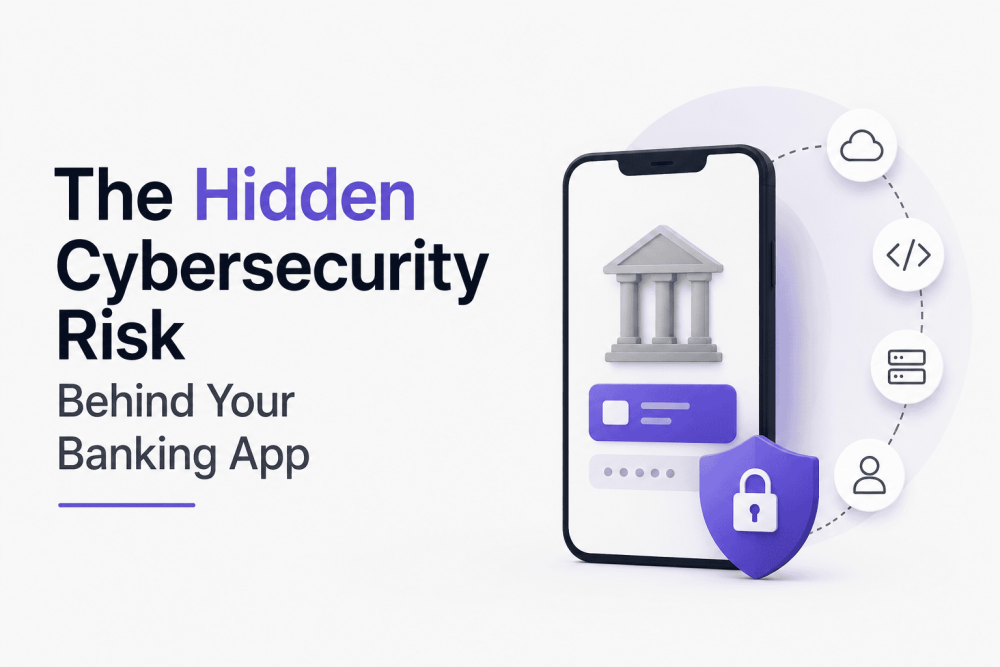

You open your banking app, enter your credentials, check your balance, and transfer money. From your perspective, it feels like a simple interaction with your bank.
But behind that simple app is an entire digital ecosystem.
Modern banking applications often rely on FinTech platforms, APIs, cloud infrastructure, payment systems, authentication services, and third-party integrations. Each connection helps deliver a better banking experience, but each can also introduce another potential attack surface.
Your Banking App Is More Than an App
A banking app rarely operates in isolation.
A single transaction can involve multiple systems and service providers. Banks may work with FinTech companies for mobile applications, payment processing, identity verification, APIs, analytics, infrastructure, and other services.
This creates an important cybersecurity challenge:
A vulnerability doesn’t always have to exist inside the bank itself to become a security risk.
A weakness in a connected system, exposed API, poorly secured integration, or compromised third-party service can potentially create a path toward sensitive systems and data.
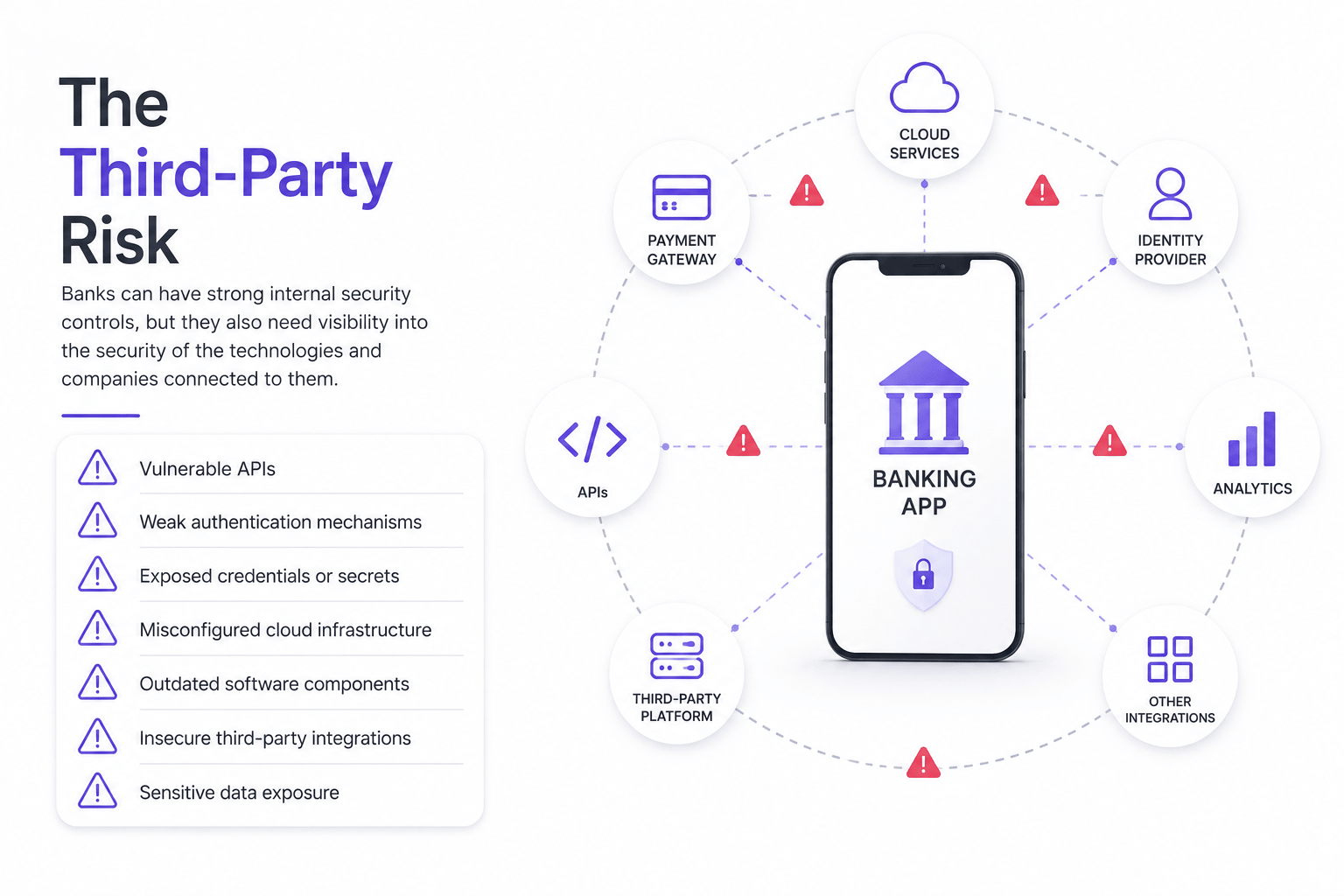
The Third-Party Risk
Banks can have strong internal security controls, but they also need visibility into the security of the technologies and companies connected to them.
Some common risks include:
- Vulnerable APIs
- Weak authentication mechanisms
- Exposed credentials or secrets
- Misconfigured cloud infrastructure
- Outdated software components
- Insecure third-party integrations
- Sensitive data exposure
The more connected the banking ecosystem becomes, the more important it is to continuously identify and address these weaknesses.
Why One-Time Security Testing Isn’t Enough
Traditional penetration testing and security assessments remain important. But digital banking environments are constantly changing.
New features are launched. APIs are updated. Dependencies change. New integrations are introduced. Infrastructure evolves.
A system that was secure yesterday may have a new vulnerability tomorrow.
That’s why organizations need to move beyond simply asking:
“Is our application secure?”
They should also be asking:
“What has changed, and what could now be vulnerable?”
Where Bugv Comes In
This is where Bugv can play an important role in the banking and FinTech security ecosystem.
Instead of relying only on periodic security assessments, organizations can use Bugv to create a more proactive approach to vulnerability discovery. Through ethical hackers, vulnerability disclosure programs, private and open security programs, and AI-powered capabilities, Bugv helps organizations identify security weaknesses before they become incidents.
For a FinTech company powering critical banking technology, this can mean continuously testing its digital assets and giving security researchers a responsible way to report vulnerabilities.
For banks, it can provide another layer of visibility into the security of their applications and connected digital ecosystem.
The goal isn’t simply to find bugs.
It’s to find them before someone with malicious intent does.
The Security of Banking Extends Beyond the Bank
As banking becomes increasingly digital, cybersecurity cannot stop at the bank’s own infrastructure.
It has to include the FinTech ecosystem behind the customer experience.
Banks need to understand the risks across their technology partners and third parties. FinTech companies need to treat security as a core part of the products and services they provide.
Because customers may only see one banking app on their screen.
But behind that screen could be dozens of technologies, systems, and connections—and every one of them matters.
With proactive vulnerability discovery and responsible security research through platforms like Bugv, organizations can make that ecosystem harder to exploit and safer for everyone who depends on it.