


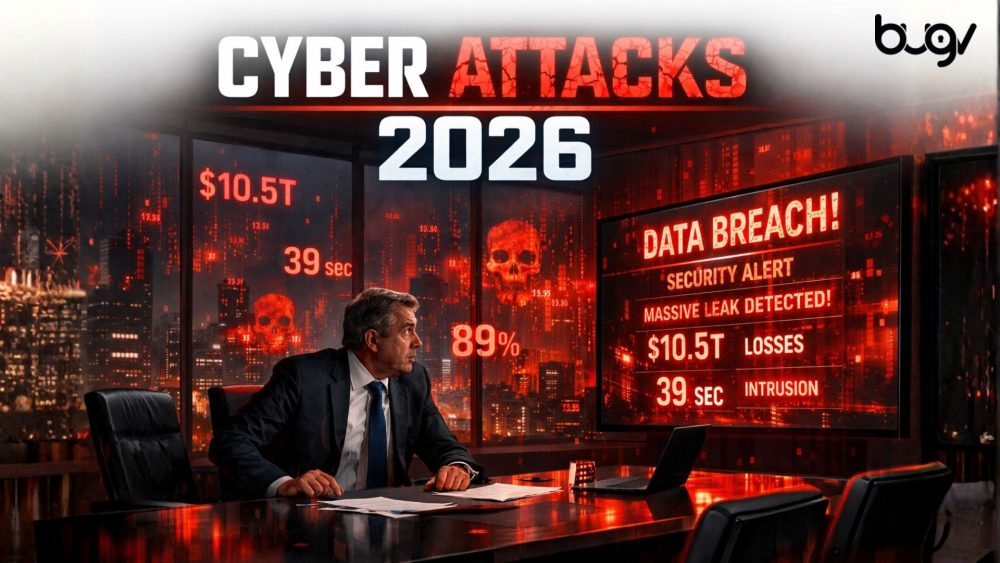

For years, cybersecurity was treated as a cost center something organizations invested in reluctantly, often only after a breach. In 2026, that mindset is not just outdated; it is dangerous. The scale, speed, and sophistication of cyberattacks have reached a point where inaction is no longer a viable strategy. The statistics paint a picture that every business leader must understand, not as an IT problem, but as a fundamental business risk.
Ransomware: The Threat That Refuses to Slow Down
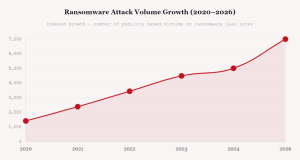
Ransomware remains the most financially devastating form of cyberattack in 2026, and its trajectory shows no sign of slowing. According to current threat intelligence, ransomware attacks are on track to increase 40% compared to 2024 levels and a staggering 400% compared to 2020. Over 7,000 victims have already been publicly named on ransomware leak sites this year alone a dramatic increase from 1,412 in 2020. The average total cost of a ransomware incident, including downtime, recovery, legal fees, and reputational damage, now exceeds $5.1 million per incident with the ransom payment itself representing only a fraction of that figure.
One of the more counterintuitive findings of 2026 is that paying the ransom rarely resolves the problem. Organizations that pay face an 80% re-attack rate attackers mark compliant victims as reliable revenue sources and return. Organizations that refuse and recover through backups and incident response face a 20% re-attack rate. This data alone makes a compelling case for investing in resilience over capitulation.
AI Has Become the Attacker’s Most Powerful Weapon
Perhaps the most significant shift in the 2026 threat landscape is the weaponization of artificial intelligence by cybercriminals. CrowdStrike’s 2026 Global Threat Report documented an 89% increase in attacks by AI-enabled adversaries compared to the previous year. Attackers are using AI to craft hyper-personalized phishing messages indistinguishable from genuine communication, automate the discovery of vulnerabilities at scale, generate malware variants faster than signature-based defenses can update, and clone voices and faces for deepfake fraud campaigns. ChatGPT alone was referenced in criminal forums 550% more than any other AI model a signal of just how mainstream AI-assisted attack tooling has become among cybercriminal communities.
At the same time, 82% of detections in 2025 involved no malware at all attackers are increasingly using legitimate credentials, trusted tools, and social engineering to move through systems invisibly, leaving no traditional indicators of compromise for security tools to detect.
The Human Element Remains the Dominant Vulnerability
Despite advances in security technology, human error and social engineering remain the root cause of between 74% and 95% of all data breaches in 2026. Businesses themselves rank human error and social engineering as their single biggest vulnerability driven by poor password practices (30% of incidents), insufficient security training (29%), and a lack of in-house cybersecurity expertise (27%). The encouraging counterpoint: organizations that invest in structured security awareness training reduce phishing susceptibility by 40% within 90 days and by 86% after one year of consistent programming.
What These Numbers Mean for Your Business
The statistics of 2026 make one thing unambiguously clear: cybersecurity is no longer a technology investment it is a business continuity imperative. The question is no longer whether an organization will be targeted, but whether it will be prepared when that moment arrives. Organizations that treat security as an ongoing process combining continuous testing, employee training, real-time monitoring, and proactive vulnerability discovery consistently demonstrate lower breach rates, faster response times, and significantly lower total incident costs than those relying on periodic compliance checkboxes.
For businesses in South Asia and beyond, the window for building that resilience is narrowing. With attack volumes accelerating, AI lowering the barrier to entry for attackers, and breach costs climbing year over year, the organizations that invest proactively today will be the ones still standing when the inevitable incident occurs.
The Statistics Are Clear. Is Your Defense?
Bugv connects your organization with skilled ethical hackers who actively probe your systems for vulnerabilities before attackers do, giving you the intelligence you need to act before the statistics become personal. Don’t wait for a breach to take cybersecurity seriously.