


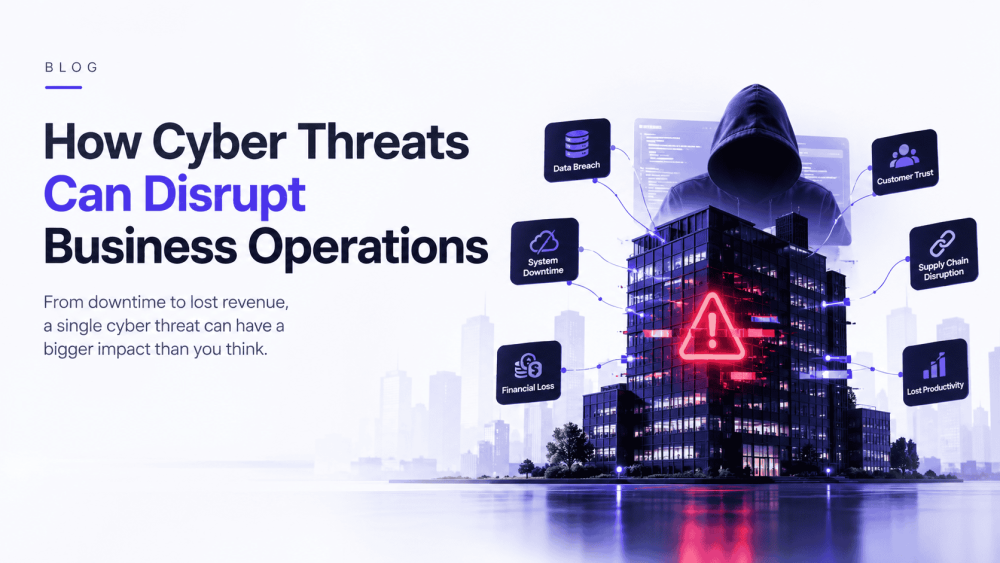

Cybersecurity is often viewed as an IT concern. But when a cyber threat affects the systems a business depends on, it quickly becomes a business continuity problem.
Modern organizations rely on digital systems for communication, payments, customer service, supply chains, data storage and daily operations. When those systems are compromised or become unavailable, the impact can extend far beyond the IT department.
A single vulnerability can create a chain reaction that affects employees, customers, revenue and the overall ability of a business to operate.
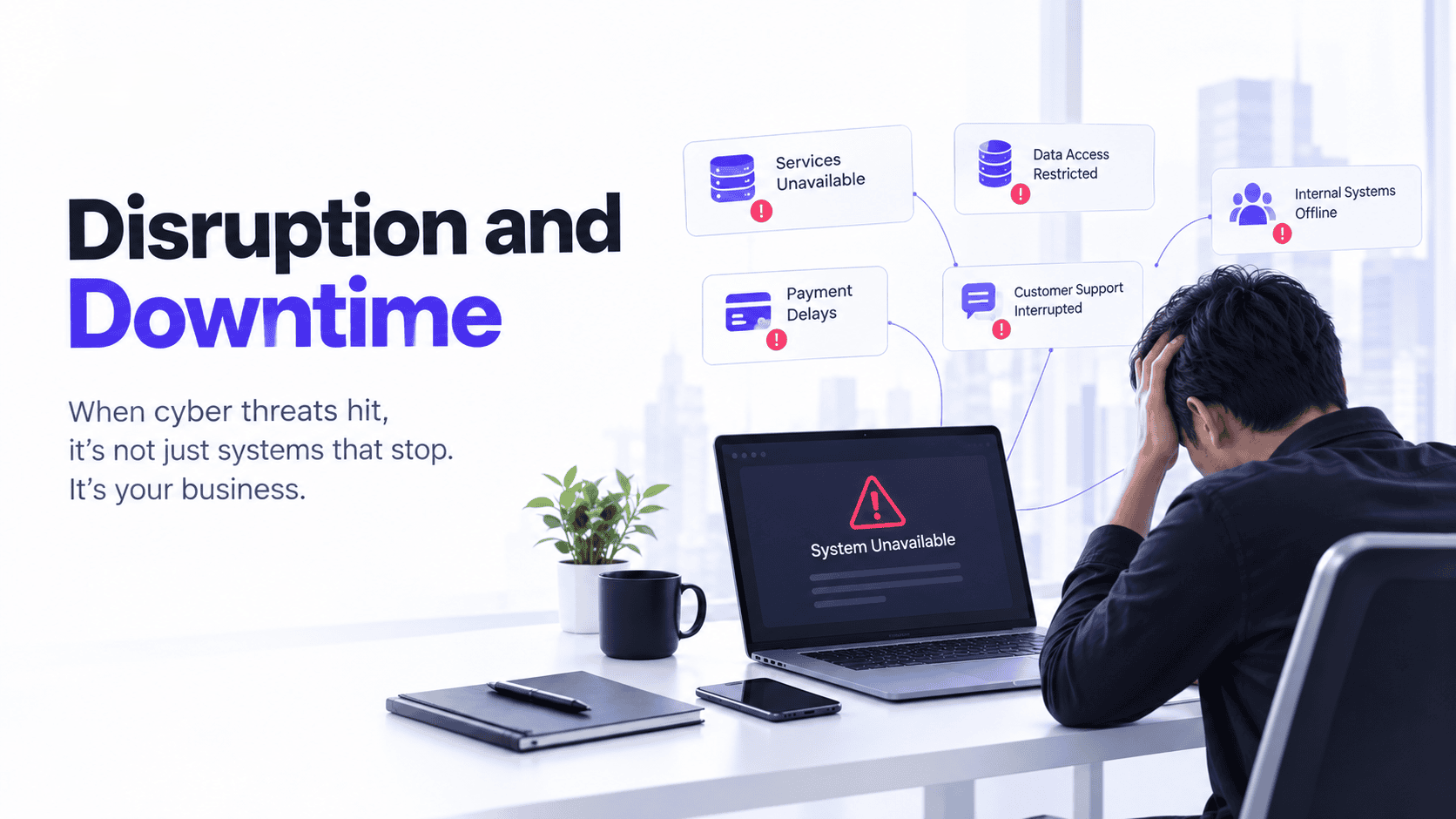
Disruption and Downtime
Cyber incidents can make important systems or services temporarily unavailable. When employees cannot access business applications, files, websites or communication platforms, normal work can come to a standstill.
Even a short period of downtime can lead to:
- Delayed orders and services
- Missed deadlines
- Interrupted customer support
- Lost productivity
- Delayed payments and transactions
For businesses that operate continuously online, downtime can directly translate into lost revenue.
Data Loss and Exposure
Data is one of a company’s most valuable assets.
Businesses rely on customer records, financial information, employee data, intellectual property, contracts and operational documents.
A cyber incident can make data unavailable, alter it, steal it or expose it. This can make it difficult for employees to perform their jobs while also creating legal, contractual and regulatory responsibilities.
The problem isn’t only losing data. Discovering that sensitive information may have been exposed can itself trigger a major business response.
Financial Impact
The financial consequences of a cyber incident can go far beyond the initial technical fix.
Organizations may have to deal with:
- Lost revenue during downtime
- Investigation and incident response expenses
- System recovery and remediation costs
- Legal and compliance expenses
- Customer compensation or contractual consequences
- Increased security spending after an incident
This is why cybersecurity should be considered an investment in business resilience, rather than simply an IT expense.
Loss of Employee Productivity
Employees depend on digital infrastructure to perform even routine tasks.
If systems are unavailable or access has to be restricted during an incident, employees may spend hours dealing with workarounds instead of serving customers or completing their responsibilities.
A security incident can therefore create a ripple effect:
Cyber threat → System disruption → Employee downtime → Delayed operations → Financial impact
Supply Chain and Third-Party Disruption
Businesses rarely operate in isolation.
They depend on vendors, cloud providers, payment processors, software providers, logistics companies and other partners.
A security incident involving a third party can therefore affect an organization even when its own systems have not been directly compromised.
This makes third-party cyber risk an important part of modern business security.
Damage to Customer Trust
Trust can take years to build but can be damaged quickly after a serious security incident.
Customers expect businesses to protect their information and maintain reliable services. If an organization experiences repeated security problems or fails to respond effectively, customers may reconsider their relationship with the company.
For B2B organizations, the impact can extend to partners, suppliers, investors and other stakeholders.
Reputation and Competitive Impact
A cyber incident can quickly become a reputational issue, particularly when customers believe an organization was unprepared.
Strong security practices can become a competitive advantage while businesses affected by incidents may have to spend significant time and resources rebuilding confidence.
Management Distraction
Cyber incidents also consume something that is difficult to recover: management attention.
Instead of focusing on growth, customers, innovation and strategy, leadership may suddenly need to focus on:
- Incident response
- Business continuity
- Customer communication
- Legal issues
- Regulatory requirements
- Recovery decisions
The impact can continue long after the initial incident has been contained.
From Vulnerability to Business Disruption
The biggest insight is simple:
A cybersecurity vulnerability can become a business problem.
The chain can look like this:
Unidentified vulnerability → Cyber incident → System disruption → Business interruption → Financial and reputational impact
This is why organizations should not wait until an attack occurs to understand their exposure.
Continuous visibility, security testing, monitoring and timely remediation can help organizations identify weaknesses before they become operational disruptions.
Where Bugv Comes In
This is where Bugv can help organizations take a more proactive approach to cybersecurity.
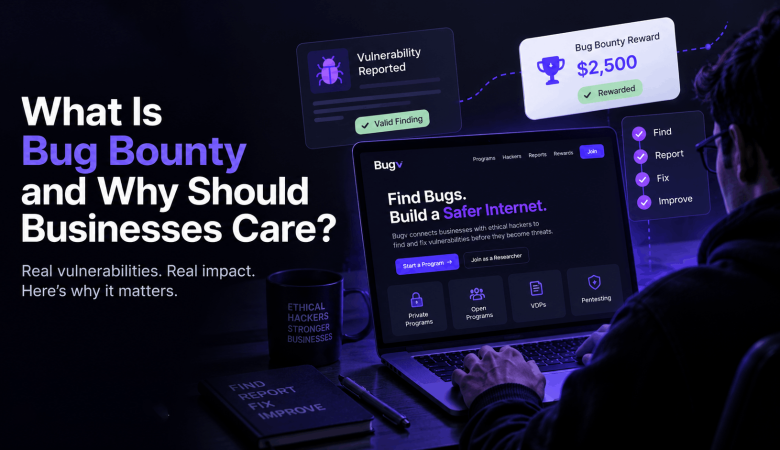
Bugv connects organizations with ethical hackers who can help identify vulnerabilities across their digital assets before malicious attackers discover them.
Through Private Programs, Open Programs, Vulnerability Disclosure Programs (VDPs) and Pentesting, organizations can choose the approach that fits their security needs.
Instead of only asking what went wrong after an incident, organizations can continuously look for what could go wrong before it happens.
By combining ethical hacker expertise with AI-powered capabilities, Bugv helps organizations discover, validate and address vulnerabilities so they can reduce their exposure and strengthen their security posture.
Because finding a vulnerability is not just about fixing a technical issue.
It can mean preventing downtime, protecting data, maintaining customer trust and keeping the business moving.
The Bottom Line
A cyber threat doesn’t have to shut down an entire company to cause serious damage.
Even one compromised system, exposed dataset or disrupted service can create a chain reaction across the business.
Cybersecurity isn’t only about protecting technology. It’s about protecting the ability of a business to operate, serve its customers and keep moving forward.